Introduction:
Dolly Parton Was Ready to Meet Elvis in the Studio — Then One Phone Call Changed Everything, and Her Answer Would Be Remembered for Decades
Dolly Parton was preparing for a moment most young songwriters could only dream about when she learned that Elvis Presley wanted to record one of her songs. She was so excited about the possibility that she planned to be there when Elvis stepped behind the microphone, but on the night before the session, an unexpected phone call forced her to make a decision that could change her career forever.
The song was “I Will Always Love You,” the deeply personal farewell Dolly had written while preparing to leave Porter Wagoner and establish herself as an independent artist. By 1974, the song had already reached No. 1 on the country chart, yet having Elvis record it represented an opportunity on an entirely different scale.
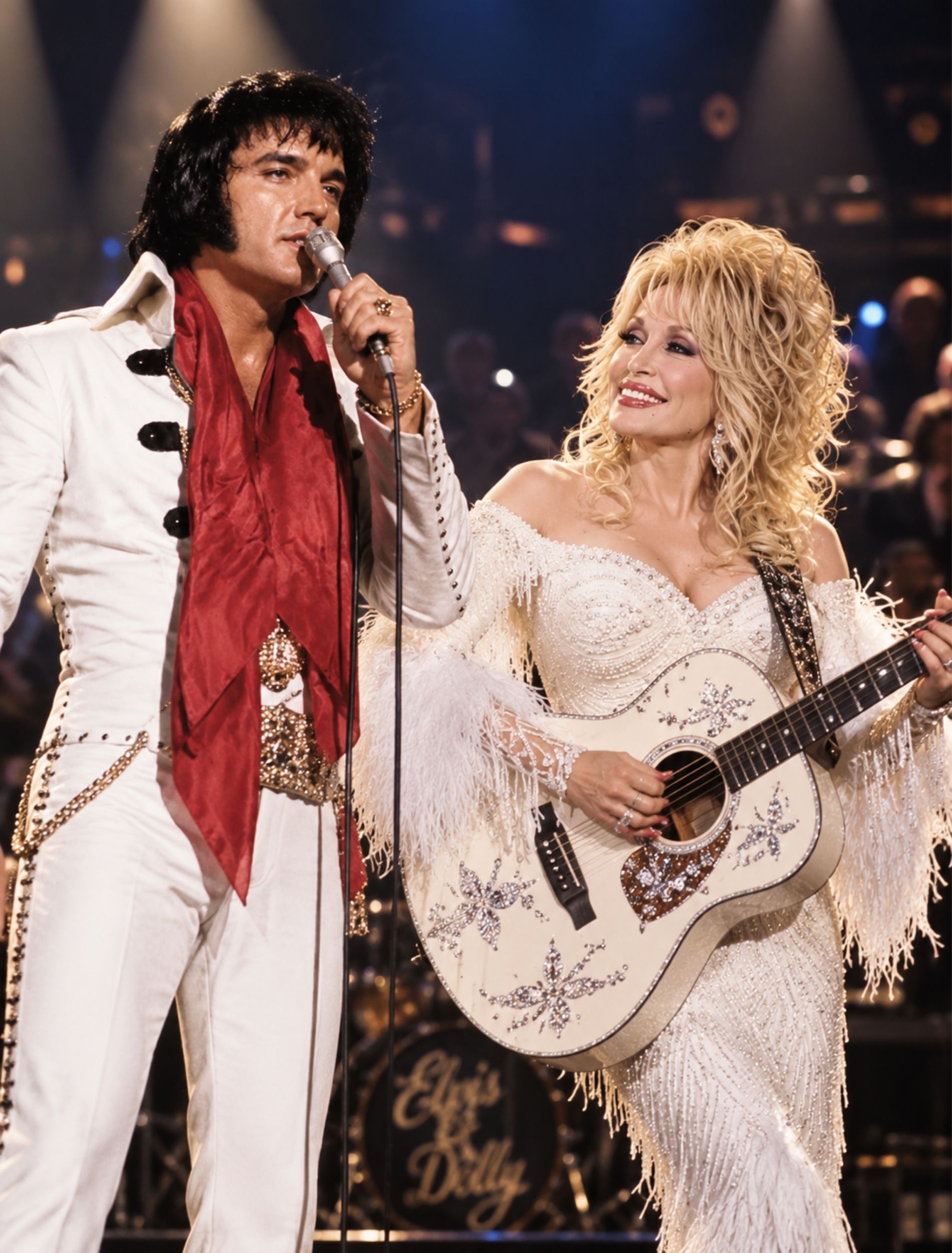
Dolly later recalled that Elvis loved the song and had already been working on how he wanted to perform it. For a young songwriter who admired him, hearing one of the biggest stars in music transform her words into his own performance seemed almost unimaginable, and Dolly was thrilled about going to the studio to witness it.
Everything changed shortly before the recording was supposed to happen when Elvis’ longtime manager, Colonel Tom Parker, contacted Dolly with a condition she had not expected. According to Dolly, Parker explained that Elvis did not record songs unless his side received publishing rights, with at least half of the publishing becoming part of the proposed arrangement.
Suddenly, Dolly was no longer deciding whether she wanted Elvis Presley to sing her song. She had to decide whether the excitement and enormous exposure of an Elvis recording were worth surrendering a significant portion of something she had written, owned and believed could remain valuable for the rest of her life.
The choice was painful because saying yes could place her composition in the hands of perhaps the most famous singer in America, while saying no could make the opportunity disappear permanently. Dolly ultimately protected her publishing rights and rejected the proposed arrangement, even though emotionally she desperately wanted to hear Elvis sing the song.
She later remembered crying throughout the night because the decision hurt so deeply. People around her reportedly questioned how she could possibly turn down an opportunity involving Elvis Presley, but Dolly understood that ownership of her songs represented more than immediate fame because those copyrights were the foundation of the publishing business and independence she was building.
Nearly two decades later, the significance of that decision became extraordinary when Whitney Houston recorded “I Will Always Love You” for The Bodyguard. Houston’s breathtaking interpretation spent 14 weeks at No. 1 on the Billboard Hot 100 and carried Dolly’s composition to audiences around the world, while Dolly remained the songwriter who had protected ownership of her creation.
There was also a deeply personal Elvis connection that Dolly would discover years later. She said Priscilla Presley told her that Elvis had sung “I Will Always Love You” to her as they walked down the courthouse steps following their divorce, giving the song an unexpected place in Elvis’ private story even though his studio recording never happened.
What appeared in 1974 to be Dolly walking away from the opportunity of a lifetime eventually became one of the defining examples of her determination to control her own work. The question remains fascinating decades later: if Elvis Presley wanted your song, would you have possessed the courage to tell his team no?