Introduction:
For nearly half a century, one question has followed Elvis Presley beyond the gates of Graceland: what really happened during the King’s final years? When Elvis died on August 16, 1977, at only 42, millions mourned a man who had seemed almost larger than life. Yet behind the familiar headlines was a far more complicated and heartbreaking story.
To the public, Elvis was still the King—the unmistakable voice, dazzling jumpsuits and crowds that erupted whenever he appeared. Behind that image, however, was a man struggling with serious health problems, exhaustion and the enormous pressure of remaining Elvis Presley every time the curtain rose. The legend remained powerful even as the man carrying it became increasingly vulnerable.
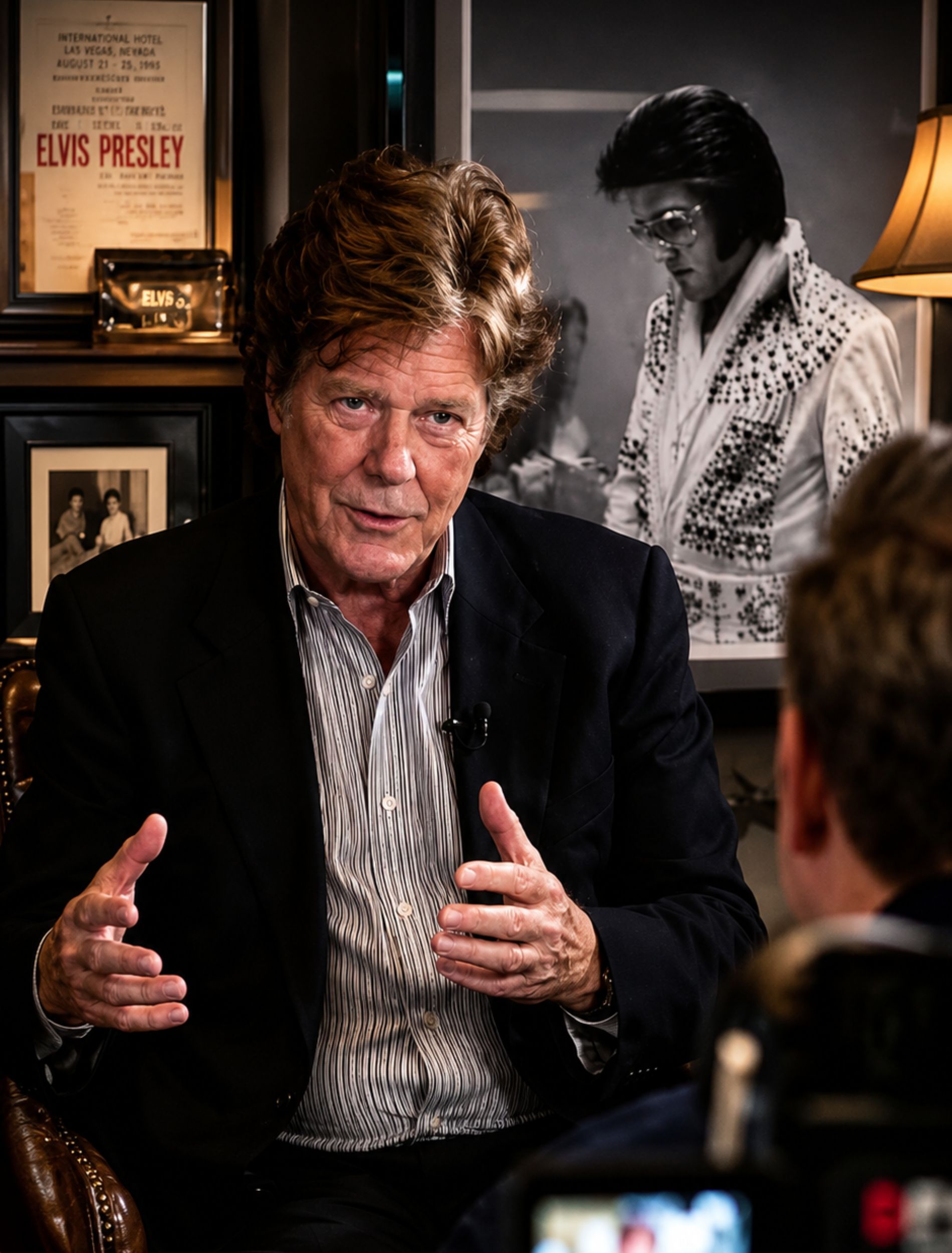
That is why the memories of longtime friend Jerry Schilling remain so compelling. Schilling knew Elvis beyond the stage and mythology, and his recollections remind us that beneath one of the most famous faces in American culture was a son, father and friend carrying burdens audiences could not see.
By the mid-1970s, the warning signs were becoming harder to ignore. Elvis was dealing with significant health problems, while prescription medications had become a troubling part of his life. His physician, Dr. George Nichopoulos, would later face intense scrutiny over his prescribing practices, but medication alone cannot explain every part of Elvis’s decline.
By then, Elvis also stood at the center of an enormous entertainment machine. Concerts had to be performed, employees depended on him, audiences were waiting, and enormous amounts of money surrounded his name. For an ordinary person, exhaustion might mean taking time off; for Elvis Presley, stopping meant disappointing thousands and bringing a massive operation to a halt.
Still, he kept walking onto the stage. Some nights, that extraordinary voice returned with such force that the years seemed to disappear and audiences could believe the young Elvis was still standing before them. On other nights, his physical exhaustion was increasingly difficult to hide.
That contradiction makes his final chapter especially painful: the legend was still growing while the man behind it was struggling. Colonel Tom Parker had helped build Elvis into an unprecedented phenomenon, but his management of the later years has also drawn criticism over touring and commercial pressures. The larger the Elvis business became, the harder escaping its demands may have been.
Then came August 16, 1977, and suddenly the music stopped. Graceland remained, along with the gold records, costumes, photographs and songs that had changed American culture, but the 42-year-old man at the center of everything was gone. What remained was a question no simple headline could completely answer.
Jerry Schilling’s memories cannot solve every mystery surrounding Elvis’s death, but they restore something important to the story: the human being behind the King. Elvis was surrounded by people and loved by millions, yet fame could not protect him from illness, exhaustion or the consequences of a life lived under extraordinary pressure.
Nearly 50 years later, perhaps the most haunting question is no longer simply “What killed Elvis Presley?” It may be something even more painful: could someone close to him have recognized how far things had gone and helped him stop before it was too late?
If Elvis was part of your youth, tell us which song still takes you back the moment you hear the first notes. ❤️ And if you know someone who still believes there will never be another King, share this story with them and keep those memories alive.