Introduction:
Charley Pride and the Song That Broke Country Music’s Strongest Barrier
Before America knew his face, it knew his voice—and that was exactly how nervous record executives wanted it.
In the 1960s, Charley Pride entered Nashville carrying a sound too powerful to ignore and an identity the industry feared audiences might reject. A Black man raised in Mississippi cotton country was attempting to succeed in a genre whose biggest stages had rarely welcomed performers who looked like him.
Early promotional efforts reportedly emphasized Pride’s music while revealing little about the singer himself. Executives worried that some radio programmers might refuse to play his records if they immediately knew he was Black. The contradiction was painful: Nashville believed his voice could sell, yet feared that showing his face might close doors before listeners heard a single note.
But once Pride began singing, prejudice had to compete with undeniable talent.
His rich baritone carried warmth, confidence and sincerity. Rather than allowing discrimination to define every interview or performance, Pride focused relentlessly on the music. He did not ask audiences to lower their expectations; he exceeded them until the old assumptions became impossible to defend.
Beside him throughout that uncertain journey was his wife, Rozene. The couple married in 1956, long before awards and standing ovations became part of their lives. While Pride traveled, recorded and faced the pressures of an unforgiving business, Rozene helped manage their affairs, raised their family and provided the stability fame could never guarantee.
She was not simply watching history unfold—she was helping him survive it.
Then, in 1971, Pride released the song that would transform his career and permanently alter country music: “Kiss an Angel Good Mornin’.”
Its message was simple, joyful and instantly memorable. Pride delivered it with such natural charm that barriers seemed to fall with every chorus. The recording reached No. 1 on the country chart, crossed into the pop market and became his signature song.

That same year, the Country Music Association named him Entertainer of the Year, making Pride the first Black performer to receive the organization’s highest honor. It was more than a personal victory. His success challenged an industry—and a nation—to reconsider who had the right to represent country music.
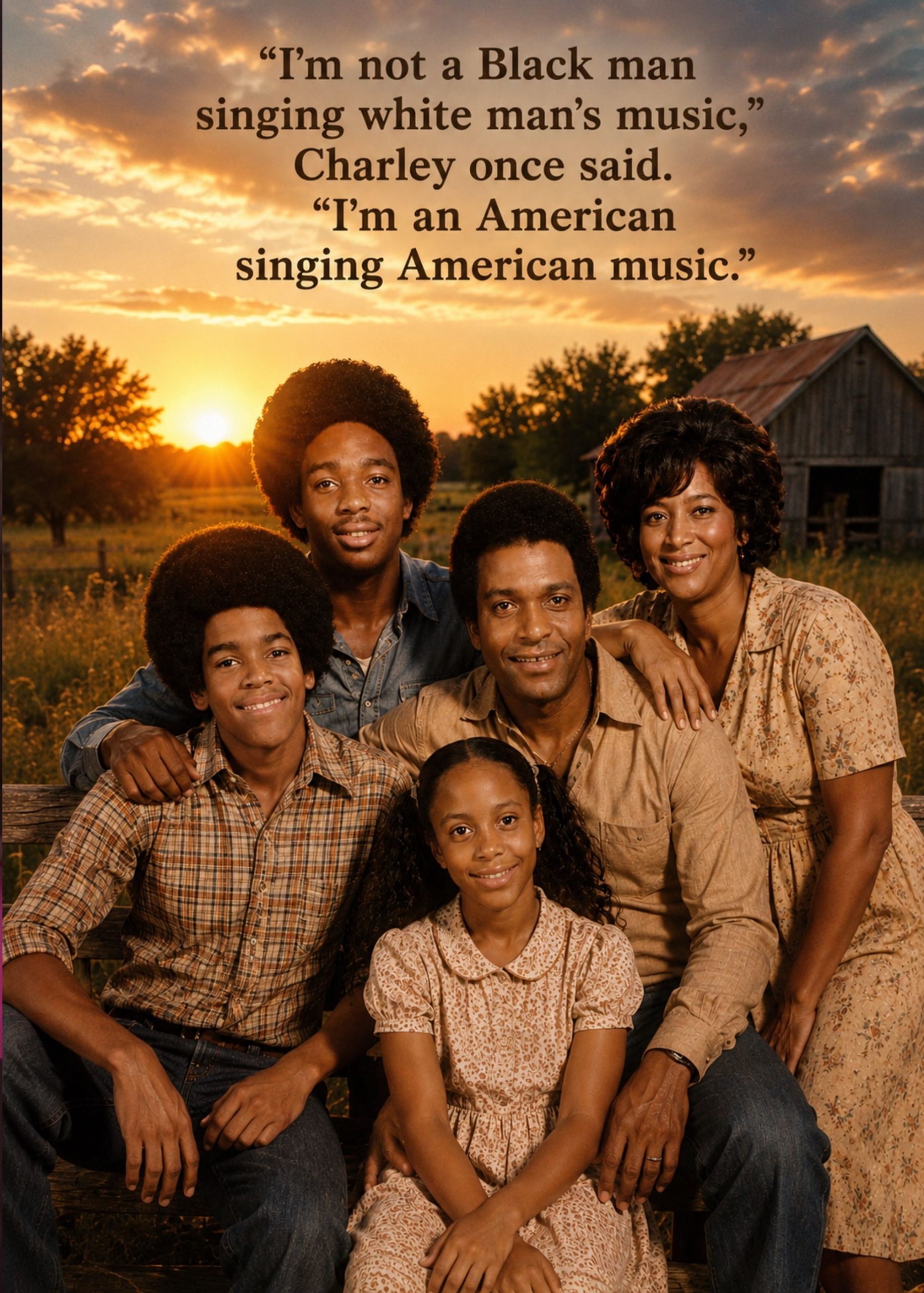
Pride refused to be reduced to a novelty. He described himself not as a Black man performing someone else’s music, but as an American singing American music. His career ultimately produced dozens of chart-topping country hits and opened possibilities for artists who would follow.
Nearly five decades later, the story returned to where so many fans remembered it beginning.
At the 2020 CMA Awards, an 86-year-old Pride accepted the Willie Nelson Lifetime Achievement Award and performed “Kiss an Angel Good Mornin’” with Jimmie Allen. His voice carried the weight of every closed door, every doubtful executive and every listener he had won over.
It became his final televised performance. Pride died only weeks later from complications related to COVID-19.
Yet the song still sounds gloriously alive.
Charley Pride did more than cross country music’s boundaries—he exposed how unnecessary they had always been. Which of his songs holds the strongest memory for you? Share this story so another generation understands the courage behind that unforgettable voice.