Introduction:
He Came Home Hoping to Save His Family—But the Empty House Waiting for Keith Whitley Became Part of Country Music’s Most Heartbreaking Story
By 1988, Keith Whitley appeared to have everything he had spent years chasing: No. 1 records, a voice that country radio could not get enough of, and a young family waiting for him beyond the stage lights. Yet while audiences heard a man singing heartbreak with astonishing honesty, few realized that behind closed doors, Whitley was fighting a private battle that threatened the very life he loved most.
Long before “Don’t Close Your Eyes” and “When You Say Nothing at All” made him a country star, Whitley had been shaped by the hills of Kentucky and the unforgiving road life of bluegrass music. Performing alongside Ricky Skaggs and later working with Ralph Stanley gave him years of experience before Nashville finally embraced him, and somewhere along those endless miles, his voice acquired an emotional weight that sounded almost impossible for such a young man.
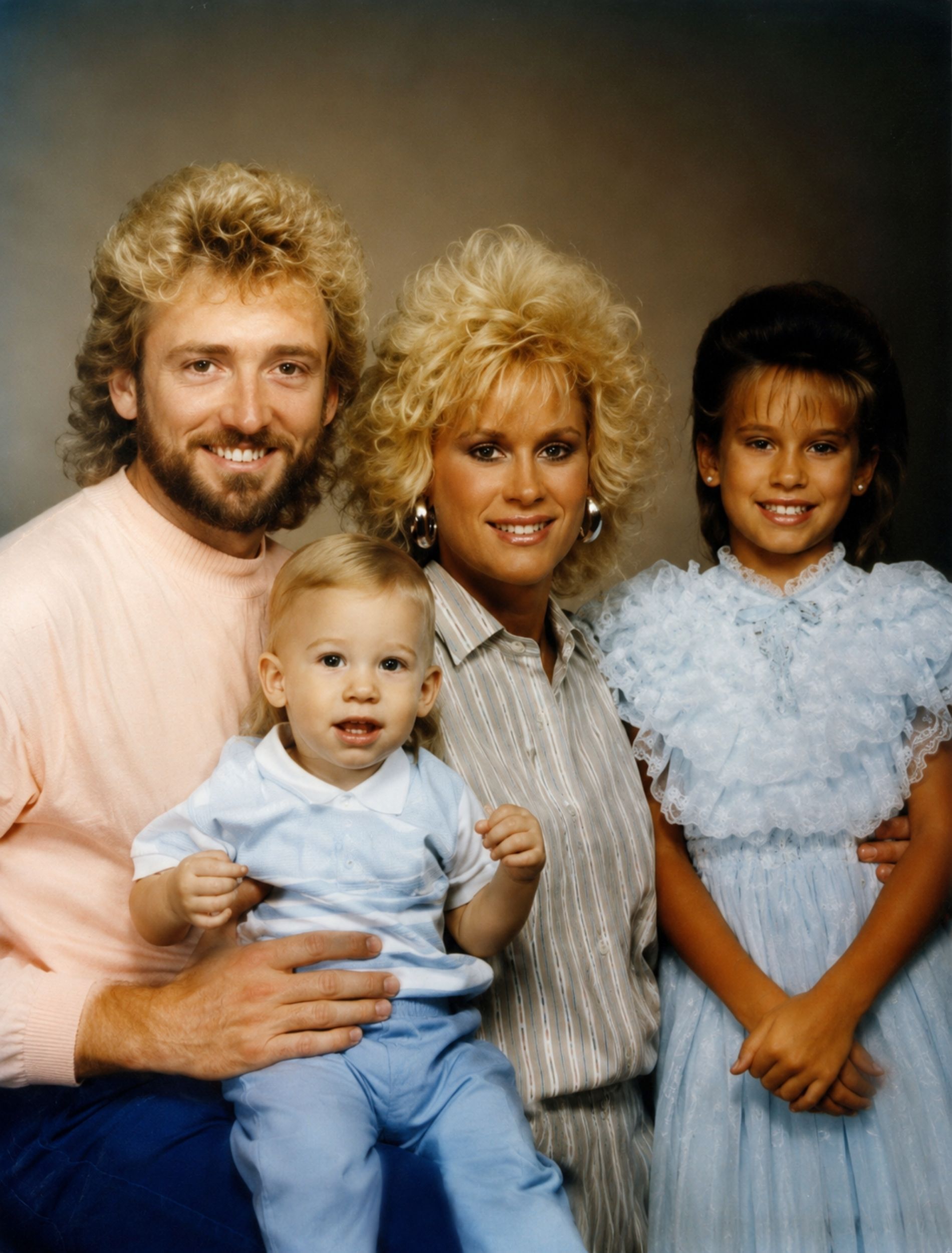
When success finally arrived, it came quickly, and Whitley suddenly found himself becoming one of country music’s most promising new stars. His marriage to fellow singer Lorrie Morgan in 1986 seemed to complete the picture, and the birth of their son, Jesse Keith Whitley, the following year gave him something even more precious than another hit record could ever provide.
Behind that beautiful family picture, however, Whitley had been struggling with alcohol for years, and the consequences increasingly followed him home. There were periods of sobriety and genuine hope, but there were also painful setbacks, and Morgan eventually faced the impossible reality that loving someone deeply did not mean she could defeat his addiction for him.
Then came a homecoming that would become one of the most painful episodes associated with their story. After another period of drinking, Whitley reportedly traveled back to Nashville by bus, perhaps believing that once he reached home there would still be another opportunity to repair what had been damaged.
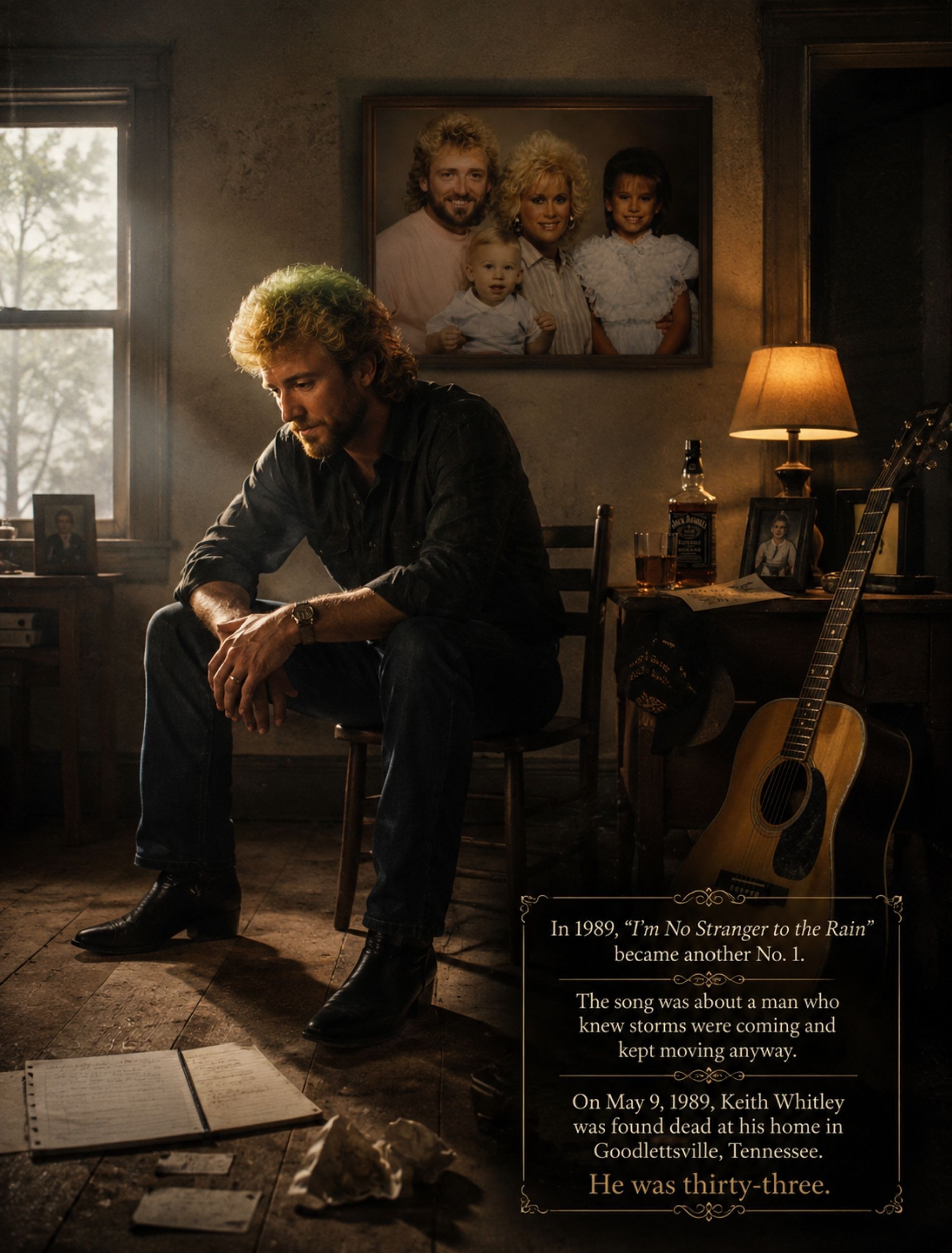
Instead, he returned to discover that Morgan had left with their young son, leaving behind the kind of silence that no cheering audience could drown out. For a singer whose extraordinary gift was making millions of strangers understand loneliness, there was a cruel irony in suddenly finding himself confronting that emotion away from the microphone, without a band, an audience, or a song to hide behind.
Even as his personal life became increasingly fragile, his career continued climbing, and in early 1989, “I’m No Stranger to the Rain” reached No. 1. Listeners heard a remarkable country song about surviving life’s storms, but knowing what Whitley was enduring privately gives the recording another emotional dimension, because his ability to communicate pain no longer seemed like something created only inside a recording studio.
Whitley never needed dramatic vocal tricks to make heartbreak believable, because the smallest hesitation or ache in his delivery could make a lyric feel painfully personal. That vulnerability became his greatest artistic strength, yet it also makes his final recordings difficult to separate from the struggles unfolding behind the scenes.
On May 9, 1989, Keith Whitley died from alcohol poisoning at his home near Nashville at only 34 years old, ending a career that appeared to be just reaching its extraordinary potential. There would be no decades of new albums, anniversary tours, or elderly country legend returning to the stage for one final song, leaving fans forever wondering what that unmistakable voice might have accomplished.
Perhaps the saddest part of Keith Whitley’s story is not simply that country music lost a brilliant singer so young, but that his greatest professional success arrived while the life he treasured away from the spotlight was becoming increasingly difficult to hold together. His story remains a painful reminder that packed arenas, hit records and applause cannot always silence the struggles taking place inside someone’s private world.
Decades later, his songs remain because Keith Whitley could transform emotions that were almost impossible to explain into music that ordinary people immediately understood. Once you know what was happening behind that unforgettable voice, however, songs about loneliness, regret and holding on can sound profoundly different—as though Whitley was revealing pieces of himself long before the world understood what it was hearing.
And that leaves one haunting question: when you listen to Keith Whitley today, are you hearing one of country music’s greatest voices—or a man quietly telling us what he was going through all along?