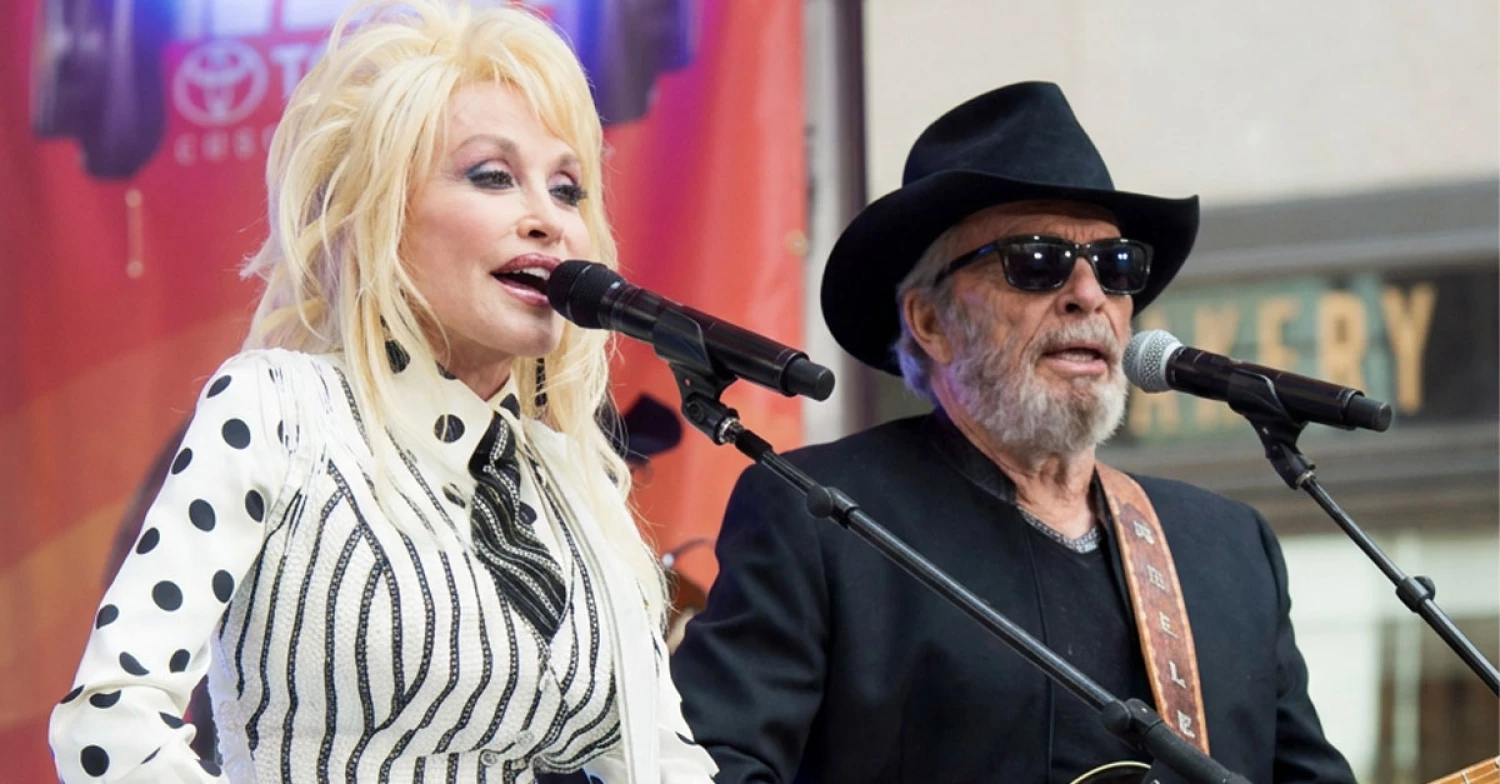
Introduction:
Long before “Always Wanting You” became Merle Haggard’s twentieth No. 1 hit, it was a private confession meant for only one woman. That woman was Dolly Parton—and her tender response transformed Haggard’s unreturned feelings into one of country music’s most unforgettable songs.
During 1974 and 1975, Haggard and Parton spent considerable time together while touring. Their professional connection was already strong: Haggard had recorded Parton’s “Kentucky Gambler,” which became another chart-topping success. Away from the stage, however, their friendship quietly deepened as long hours on the road allowed them to speak about ambitions, disappointments, and the uncertain future that awaited them both.
Haggard later remembered Parton sitting on a pillow in the aisle of his tour bus, resting her head against his knee as she talked about her dreams. To the audience, Dolly was a dazzling performer whose charisma could fill any room. To Haggard, she became something more intimate—the warm, thoughtful woman behind the rhinestones, whose trust and openness gradually captured his heart.
The feelings were real, but they were not shared in the same way.
While in Reno, Nevada, Haggard turned his longing into a song. At approximately three o’clock one morning, overwhelmed by what he had written, he telephoned Parton and sang “Always Wanting You” directly to her. It was an extraordinarily vulnerable moment from a man whose public image had been built on strength, independence, and hard-earned resilience.
Parton listened, but she gently made it clear that she treasured him as a friend. According to the story Haggard later told, she said he reminded her of her brother, Denver. There was no cruel rejection and no dramatic confrontation—only an honest answer that likely hurt precisely because it was delivered with such affection.

Rather than allowing that disappointment to destroy their friendship, Haggard placed everything he could not say into the recording. Released in February 1975, “Always Wanting You” rose to the top of the country chart and became his twentieth No. 1 single. Millions heard themselves in its quiet ache: the experience of loving someone deeply while knowing that love may never be returned.
Haggard later suggested that writing the song helped him finally move beyond his feelings. Yet the emotion remained preserved in every line, turning a lonely late-night confession into something timeless.
Perhaps that is why “Always Wanting You” still resonates decades later. It was never merely a love song—it was the sound of a man accepting that some people can change your heart without ever belonging to it.
Have you ever loved someone you knew you could never have? And did a song help you finally let them go?
Video:
https://www.youtube.com/channel/UCNSsv8Hq1Jz5Lg18ImaPbnw