Introduction:
Elvis Wanted Her Song. Dolly Said No—and Nearly Two Decades Later, Whitney Houston Showed What She Had Protected
Elvis Presley wanted to record “I Will Always Love You,” and Dolly Parton wanted to hear him sing it. For a songwriter who had grown up with little money and enormous dreams, the opportunity carried extraordinary meaning. Yet she walked away, sacrificing a recording she treasured to protect something audiences could neither see nor hear: her publishing rights.
The story becomes more revealing when the celebrity glamour falls away. This was not a feud between two musical legends or a rejection of Elvis’s talent. According to Dolly’s accounts, the obstacle was a business condition presented by his manager, Colonel Tom Parker, who required a share of the song’s publishing.
Before that offer, the composition had already helped Dolly navigate another difficult separation. She wrote it as a farewell to Porter Wagoner, whose television show had brought her national exposure. She wanted an independent career, but she also wanted to acknowledge the man who had helped her reach that point.
That tension gave the song its emotional depth. Leaving someone’s side does not always mean forgetting what they gave you. In Dolly’s hands, gratitude and determination could coexist, creating a goodbye that listeners would eventually make part of their own lives.
Released in 1974, her recording became a country hit. When the possibility of an Elvis version emerged, she faced another decision about independence, this time involving the composition itself. Parker’s requested publishing share would have meant surrendering part of the financial interest in a song she had created.
Dolly refused the terms, and Elvis’s recording never happened. She later recalled crying all night over the lost opportunity. That admission preserves the human cost of a decision often celebrated simply as evidence of her business intelligence: protecting her work still broke her heart.
Hindsight makes her choice look easier than it was. She could not know that another extraordinary singer would someday carry the song across the world. She had to weigh a remarkable opportunity against the lasting value of her writing without any promise that the future would reward her.
Then, in 1992, Whitney Houston recorded “I Will Always Love You” for The Bodyguard. Her interpretation brought the composition to an immense international audience, demonstrating how dramatically a song could grow through another artist’s voice. Dolly remained its songwriter and retained the publishing she had declined to share.
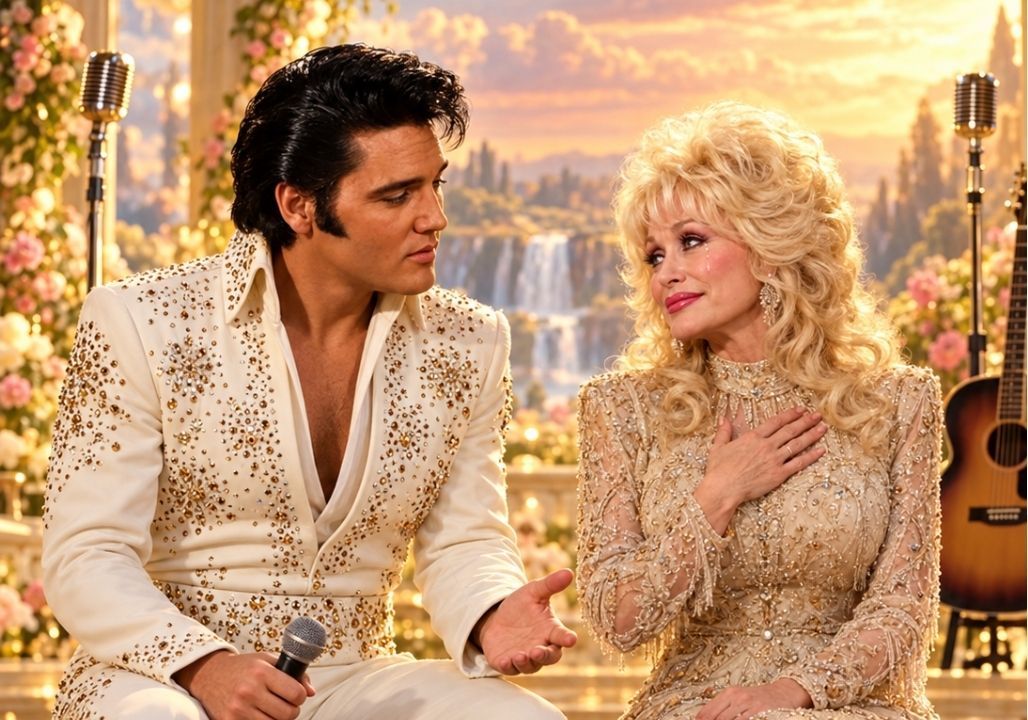
The missing Elvis recording remains a compelling musical possibility. Nobody can know how his interpretation would have sounded or where it might have taken the song. What we can hear is the remarkable distance between Dolly’s intimate farewell and Whitney’s soaring performance, both rooted in the same composition.
That is why this story reaches beyond music. It speaks to anyone who has feared losing an opportunity by asking for terms they could live with. Would you have accepted the Elvis deal, or protected the song? Share your thoughts—and this story with someone learning to trust the value of their own work.
Video:
Elvis Presley – Can’t Help Falling In Love (Aloha From Hawaii, Live in Honolulu, 1973)