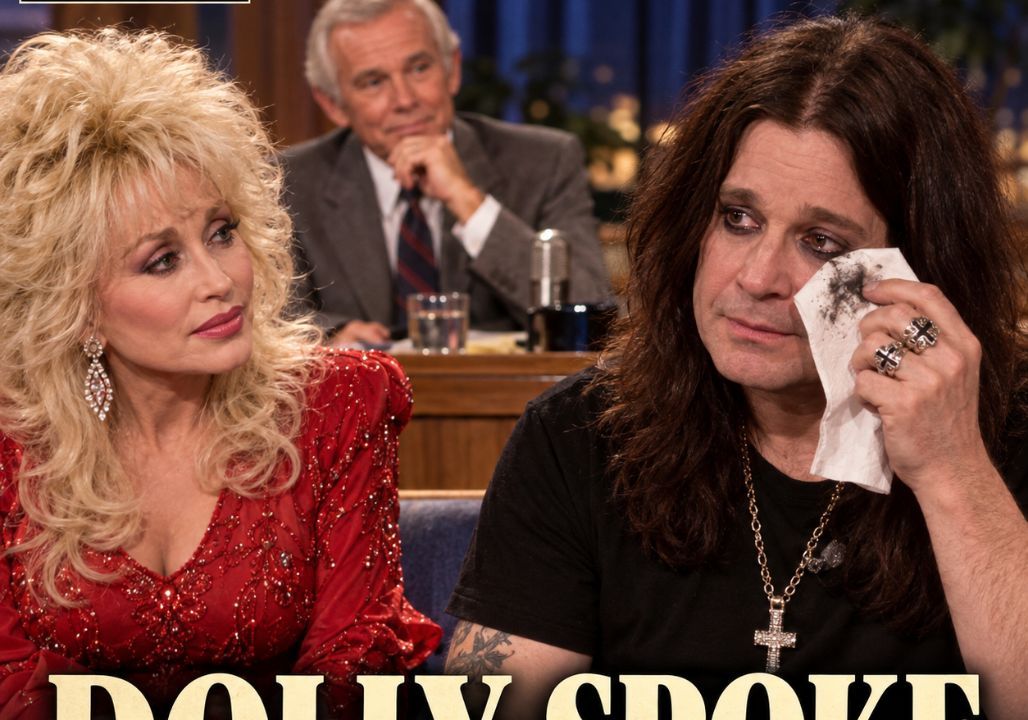
Dolly, Ozzy, and a Napkin: A Story About What Stars Hide Behind
Ozzy Osbourne walks onto Johnny Carson’s stage expecting a confrontation with Dolly Parton. Instead, he asks for a napkin—and the story turns toward something more painful than wounded pride. The supplied YouTube narrative describes this as a March 1987 encounter, but provides no corroborating evidence; the scene and its private conversations should be read as an unverified account.
A Challenge Beneath the Spotlight
The narrative opens with Dolly promoting Trio, her acoustic collaboration with Emmylou Harris and Linda Ronstadt. After years of delays, the record represents the pleasure—and vulnerability—of letting three voices carry the music. For anyone who remembers those harmonies, the appeal needs little explanation: familiar voices, close together, with room for every feeling.
When Carson brings up Ozzy, Dolly’s response takes an unexpected direction. Rather than dismissing his singing, she praises the lonely quality beneath the spectacle, then wonders whether his elaborate image has become armor. Downstairs, according to the account, Ozzy is watching—and her challenge to sing something simple sends him toward the studio.
The Gesture Nobody Expected
What follows begins as an argument about who gets to judge an entertainer’s appearance. Ozzy points toward Dolly’s own carefully constructed image, and she acknowledges that her wigs, heels, and glamour tell a story, too. Beneath their differences, the narrative finds two performers who understand the distance between a public character and a private self.
Then comes the napkin. In the telling, Ozzy borrows Carson’s paper napkins, wipes away his eyeliner, removes his rings, and sets aside his sequined jacket. It is a vivid image: a performer surrendering the familiar details that usually announce him before he speaks.
The Friend Behind the Silence
The emotional answer arrives through Randy Rhoads, the guitarist whose loss sits at the center of this account. Ozzy explains that the quieter music reminds him of the friend who once played beside him. Suddenly, the stage effects take on another meaning: noise that keeps an absence from becoming unbearable.
From a battered bag, he produces a recording of Rhoads playing a delicate acoustic piece associated with his mother, Dolores. The narrative describes the studio falling silent as the guitar plays, with Dolly recognizing grief where she had first suspected fear. Their confrontation ends in an embrace and an invitation to sing something plain when he is ready.
A Promise That Outlasts the Applause
The account later connects that invitation to “Mama, I’m Coming Home,” describing a cassette sent to Tennessee and an encouraging reply from Dolly. Those letters, like the television exchange, remain unverified within the supplied material. Still, their place in the story is clear: kindness becomes something a person can carry long after the room empties.
For readers who grew up with Carson on television and these singers on the radio, the imagined intimacy is powerful. It asks us to consider the sorrow behind a familiar voice and the courage involved in letting someone hear it. Which song first helped you understand an artist differently—and who would you share that memory with?
Video: