
Introduction:
Behind Country Music’s Most Beloved Songs Lie Final Chapters So Tragic That Fans Still Struggle to Understand Them
Country music has always transformed pain into something people can carry, but some of its most unforgettable voices lived through tragedies darker than anything they ever recorded. Behind the stage lights, hit records, and roaring crowds were vulnerable human beings facing addiction, illness, accidents, and private despair. Their final chapters remind us that fame can amplify a voice without protecting the person behind it.
Hank Williams became one of the genre’s earliest and most haunting examples when he died in the back seat of a Cadillac on January 1, 1953. Only 29, the singer behind “Your Cheatin’ Heart” had struggled with chronic pain, alcohol, and prescription drugs before heart failure ended his life. The loneliness of his final journey seemed almost inseparable from the sorrow embedded in his music.
A decade later, country music suffered one of its darkest nights when a plane carrying Patsy Cline, Hawkshaw Hawkins, Cowboy Copas, and pilot Randy Hughes crashed in Tennessee. Cline was only 30, yet songs such as “Crazy” and “I Fall to Pieces” had already made her one of America’s defining voices. Hawkins and Copas also left families, audiences, and unfinished careers behind, turning that flight into a wound the country community has never completely forgotten.
The losses continued through the following decades. Jim Reeves died in a 1964 plane crash, Gram Parsons succumbed to a drug overdose in 1973, and Marty Robbins died in 1982 following years of serious heart trouble. Dottie West suffered fatal injuries in a 1991 automobile accident while traveling to the Grand Ole Opry, proving how suddenly an ordinary trip can become an artist’s final journey.
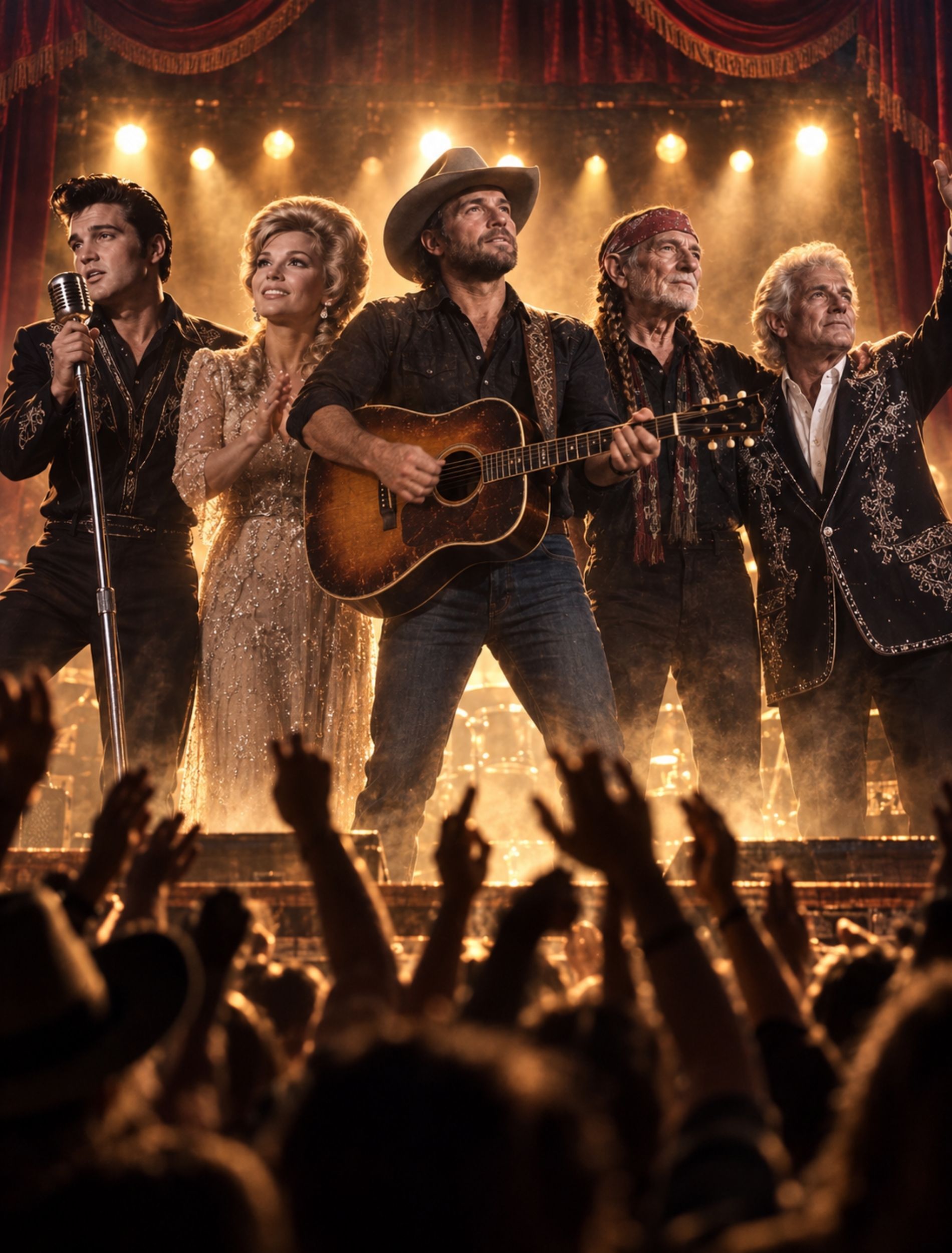
Perhaps few stories remain as painful as Keith Whitley’s. His aching performances of “Don’t Close Your Eyes” and “When You Say Nothing at All” sounded like confessions from someone carrying an invisible burden. In 1989, at only 34, acute alcohol poisoning ended his life, leaving Lorrie Morgan, their young son, and millions of listeners to wonder how much extraordinary music was still inside him.
Other legends faced longer declines that unfolded away from the applause. Waylon Jennings endured severe complications from diabetes, Glen Campbell allowed the world to witness his battle with Alzheimer’s disease, and Tammy Wynette spent years struggling with serious medical problems. Their experiences showed that courage is not always a triumphant comeback; sometimes it is simply continuing through another difficult day.
Then there were losses almost impossible to anticipate. John Denver died while piloting an experimental aircraft, Troy Gentry was killed in a helicopter crash, and Joe Diffie died after contracting COVID-19 during the frightening opening weeks of the pandemic. Mindy McCready and Justin Townes Earle became heartbreaking reminders that addiction and mental-health struggles require compassion rather than judgment.
These artists should not be remembered only for how they died. They deserve to be remembered for the comfort, honesty, and companionship their songs continue to provide long after the final curtain. Which departed country voice still makes you stop, listen, and feel that the singer is somehow still beside you?