Introduction:
When Emmy Russell Sang Her Grandmother’s Story, Patsy Heard Something That Brought Loretta Lynn Close Again
Patsy Russell had heard her mother sing “Coal Miner’s Daughter” countless times. But watching her own daughter, Emmy Russell, perform it at a piano on American Idol brought a different kind of emotion. The familiar story was suddenly traveling through another generation, carried by a voice that belonged entirely to Emmy.
Recalling that moment during a live recording of the Got It From My Momma podcast on Nashville’s Music Row, Patsy described breaking down. She had never heard Emmy perform the song before that appearance. What moved her was the way her daughter honored Loretta Lynn while finding her own way inside the music.
That distinction runs through the conversation. To audiences, Loretta was a country music pioneer whose songs gave everyday women’s experiences a powerful public voice. To Patsy and Emmy, she was also the person whose encouragement, humor, and presence shaped their understanding of themselves. Their memories bring those two versions of her together.
For Emmy, growing up with that connection could feel overwhelming. She spoke about struggling to understand her identity beyond her family and spending time doing mission work as she searched for purpose. Her grandmother believed in her songwriting, but accepting that belief required Emmy to confront her own uncertainty.
One memory carries particular emotional weight. Emmy recalled holding Loretta’s hand after her grandmother died and making a promise to do something with her gift. She did not yet know how she would fulfill it. The promise mattered because it turned encouragement she had received into a responsibility she would have to embrace for herself.
Her original song “Skinny” became one expression of that courage. During the interview, Emmy discussed writing honestly about body image and receiving messages from listeners who recognized their own struggles. Those responses helped her see that sharing something uncomfortable could create connection. Vulnerability, she discovered, could reach people who needed to feel less alone.

Patsy recognized a family resemblance in that approach. Loretta’s strength had come from singing what felt true to her, and she heard that same commitment in Emmy. The inheritance was deeper than a familiar sound: it was permission to tell an honest story, even when telling it felt frightening.
The conversation also returned to a guitar Loretta gave Emmy as a teenager. According to the family, the instrument carried an important place in Loretta’s songwriting history. Emmy described feeling the weight of receiving it; later, she came to appreciate the confidence behind the gift. Its place in the family’s museum allows others to share in that history.
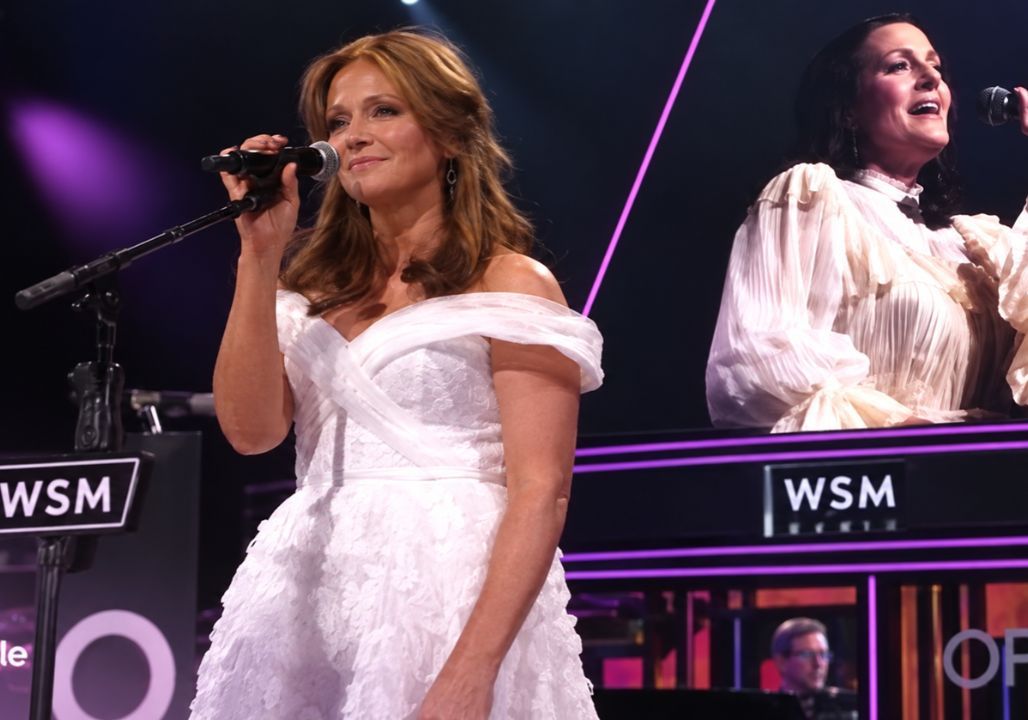
By the end, the most moving connection is remarkably simple. Emmy spoke of seeing Loretta in her mother’s eyes. Patsy heard Loretta’s storytelling spirit in her daughter’s songs. Between those observations lies something many families understand: the people we miss can remain recognizable in those we love.
For listeners, that leaves a question worth carrying beyond the episode: whose encouragement are you still learning to believe?
Video: